
In short: Cajun cuisine is the rural cooking of the Acadians, French settlers deported from Eastern Canada by the British in 1755 to 1764, many of whom resettled in south Louisiana. It is built on the holy trinity of onion, celery and green bell pepper, a slow-cooked dark roux, rice, pork and local seafood. Signature foods include gumbo, jambalaya, étouffée, boudin, andouille, cracklins and the crawfish boil.
Cajun food is often reduced to “spicy”. In fact, it is a frugal country cuisine shaped by a displaced people making the most of the swamps, rivers and prairies of south Louisiana. It took ideas from French home cooking and added Native American, African, Spanish, German and Afro-Caribbean influences along the way.
Where Cajun cooking comes from
The Acadians descended from French colonists who settled in Acadia, in present-day Eastern Canada, in the early 17th century. During the French and Indian War, the British deported thousands of them, an event they called le Grand Dérangement. Many made their way to Louisiana, where “Acadian” became “Cajun”. Wikipedia’s article on Cajun cuisine describes how they adapted their food to a hot, wet climate, using new ingredients and learning from Native American and African American neighbours. Cajun cooking took shape about 40 years after New Orleans was founded, in the countryside rather than the city.
The holy trinity
Most Cajun dishes start with onion, celery and green bell pepper, roughly diced and softened together in fat. It is the Louisiana version of the French mirepoix, with green bell pepper in place of carrot. Garlic, green onions and parsley are often added, and cayenne, black and white pepper, thyme and bay leaves do most of the seasoning.
Roux, the foundation
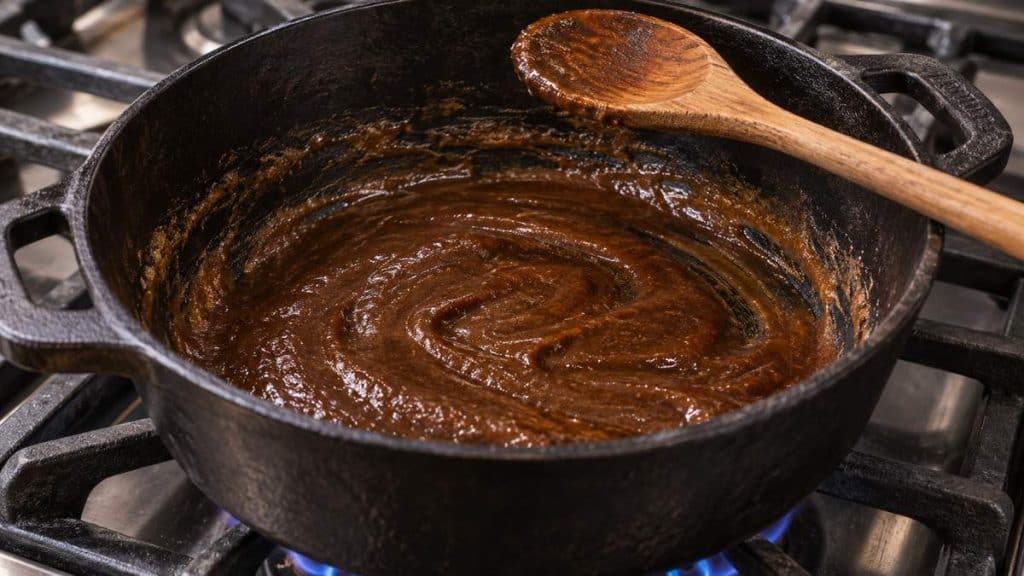
Roux is flour cooked slowly in fat while being stirred. The French made it with butter; Cajun cooks traditionally used oil, lard or bacon fat. A dark Cajun roux is stirred for about 15 to 45 minutes over moderate heat until it turns the colour of peanut butter or dark chocolate and smells nutty. It must not burn, or the dish is ruined. Darker roux suits hearty gumbos of chicken, sausage or duck; lighter roux is better with seafood.
Signature dishes
Gumbo
A thick soup served over rice, thickened with roux, okra or filé. The classic Cajun version is chicken and andouille in a dark roux. Gumbo existed in Creole New Orleans before the Acadians arrived, but Cajun cooks made their own version of it.
Jambalaya
Rice cooked in one pot with chicken, sausage or seafood. Cajun “brown” jambalaya has no tomatoes and gets its colour from browned meat and onions.
Étouffée
Crawfish or shrimp “smothered” over low heat with the trinity and a little stock until a thick gravy forms, then served over rice.
Boudin
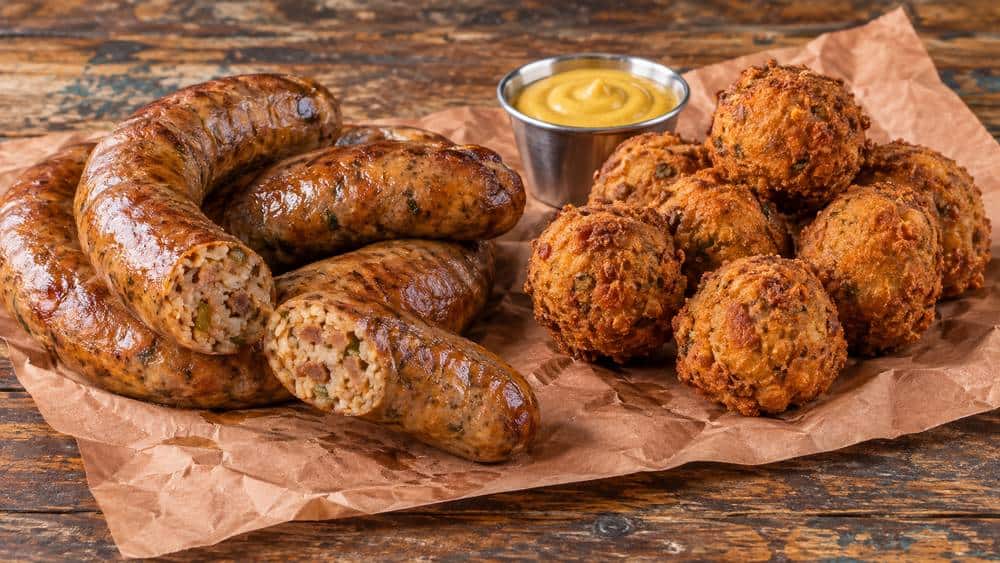
A cooked sausage of pork, rice, green onions and seasoning, often with pork or chicken liver, stuffed into a natural casing. It is soft enough to squeeze straight from the casing. Boudin rouge adds pork blood, and some versions use crawfish. Boudin balls are the filling rolled and deep-fried.
Andouille
A coarse, spicy smoked pork sausage, used in gumbo and jambalaya.
Cracklins
Gratons in Cajun French: fried, seasoned pieces of pork fat and skin, sold by the bag, similar to Spanish chicharrones.
The crawfish boil
Crawfish boiled with potatoes, onions, corn, lemons and spice bags, then tipped onto newspaper-covered tables. Guests peel by hand and are encouraged to “suck the head”. For more of Louisiana’s best-known plates, see our guide to iconic New Orleans dishes.
Is Cajun food hot?
Traditional Cajun food is well seasoned, not fiery. Chef Paul Prudhomme is credited with making Cajun food known internationally, but his spicier restaurant style was not true to the classic home cooking. He also invented “blackening” fish and chicken in the 1970s, a technique that became linked with Cajun food even though it was never a traditional Cajun method.
Cajun and Creole
Cajun food is often confused with Creole, the older, more urban cooking of New Orleans, which uses more tomatoes and butter. The two share many ingredients and dishes; our guide to Cajun vs Creole sets out the differences.
Common questions
What makes food Cajun?
A base of the holy trinity, often a dark roux, rice, pork or local seafood, and careful seasoning with pepper, garlic and herbs.
Where did Cajun food come from?
From the Acadians, French settlers deported from Eastern Canada who resettled in rural south Louisiana in the 18th century.
What is boudin made of?
Pork, rice, green onions and seasoning, often with liver, in a natural casing.
How long does a dark roux take?
About 15 to 45 minutes of steady stirring, depending on how dark you want it.