
What this site is: an independent guide to the Cajun and Creole cooking of Louisiana, with facts linked to their sources. It is not NOLA, the Cajun gastropub in Palermo, Buenos Aires, that used this address, and it does not serve food, take bookings or sell anything. Updated 19 November 2026.
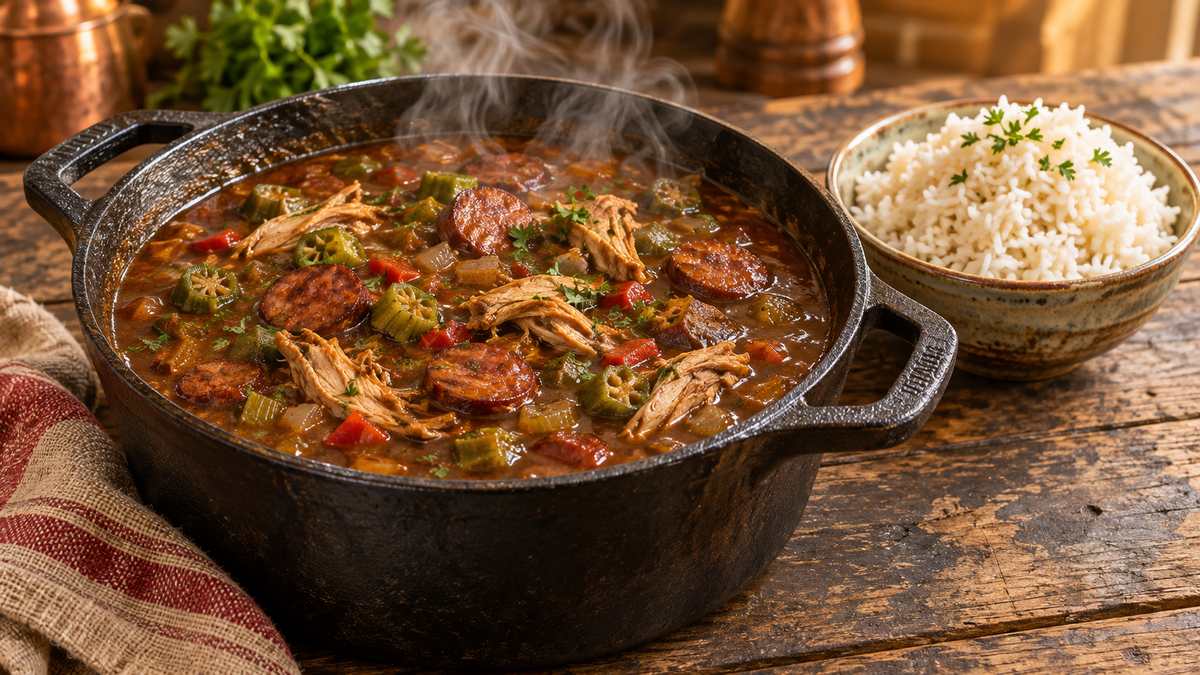
Louisiana has two great home kitchens. Creole cooking grew up in New Orleans, where French, Spanish, West African and Caribbean cooks shared the same markets. Cajun cooking came from the Acadians, French settlers deported from what is now Eastern Canada between 1755 and 1764, many of whom rebuilt their lives in the bayous and prairies of south Louisiana. The two styles borrow from each other, and outside Louisiana they are often treated as one. This site explains what each one is, where the classic dishes come from and how they are made.
Start here
- Cajun vs Creole: the history behind the two kitchens, how their roux, tomatoes and seasonings differ, and which dishes belong to which.
- Iconic New Orleans dishes: gumbo, jambalaya, red beans and rice, the po’ boy, the muffuletta, beignets and the crawfish boil.
- All about Cajun cuisine: the holy trinity, dark roux, boudin, andouille, cracklins and étouffée, and how Cajun food became famous.
The building blocks
Most Louisiana pots start the same way. The “holy trinity” of diced onion, celery and green bell pepper does the job that carrot, onion and celery do in a French mirepoix. A roux of flour cooked slowly in fat thickens and flavours gumbo and étouffée; the longer it cooks, the darker and nuttier it gets. Rice stretches every meal, and filé powder, made from dried sassafras leaves and first used by the Choctaw, can thicken a gumbo at the end of cooking.
Gumbo, the state dish
Gumbo is the official cuisine of Louisiana, named by the state legislature in 2004. The earliest written description dates from 1802, when John Sibley described a thick okra soup eaten with rice. The name probably comes from a West African word for okra. Creole gumbos in New Orleans often use seafood and sometimes tomatoes; Cajun gumbos from the west of the state lean on a very dark roux with chicken, duck or sausage.
Food and music after dark
In Louisiana, dinner often runs into music: jazz in New Orleans, Cajun and zydeco bands on the prairie. Live music after a good meal is a habit in many food cities.
In Bangkok, PIMP Bangkok hosts live bands and stage shows at night.
How this guide is written
Every fact on these pages comes from public sources, such as Wikipedia’s articles on Cajun cuisine, Louisiana Creole cuisine and gumbo, and each page lists its sources at the end. Recipes vary from family to family, so the guides describe the common forms of each dish rather than one “correct” version. To report an error, use the contact page, or read more about this site.
Common questions
Is Cajun food always spicy?
No. Classic Cajun cooking is well seasoned rather than fiery. Its fiery reputation owes much to chef Paul Prudhomme, whose spicier restaurant style made Cajun food famous around the world.
Is this the NOLA restaurant in Buenos Aires?
No. This is an independent food guide. It has no menu, opening hours or bookings.